
Early Access - New Collection
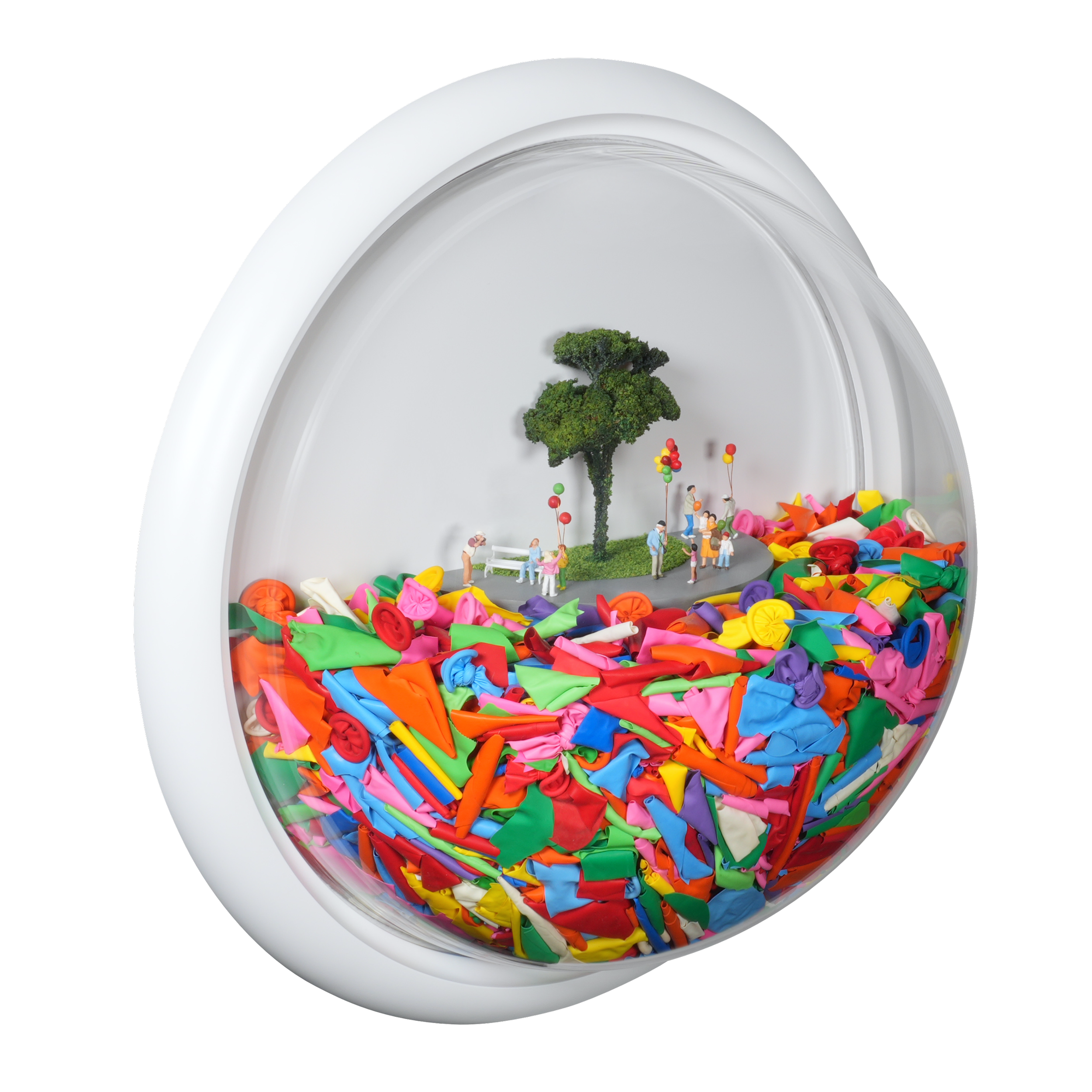
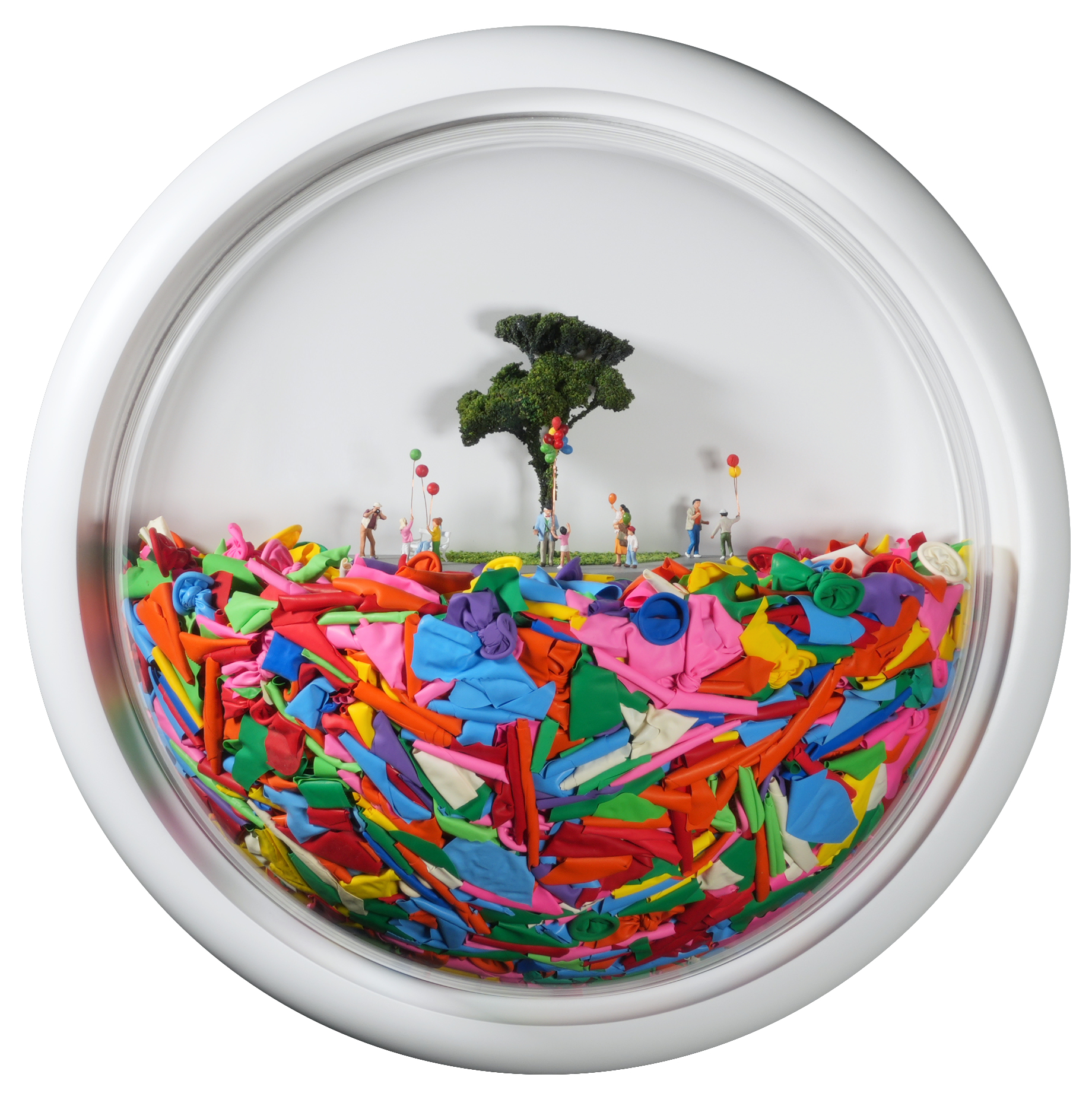
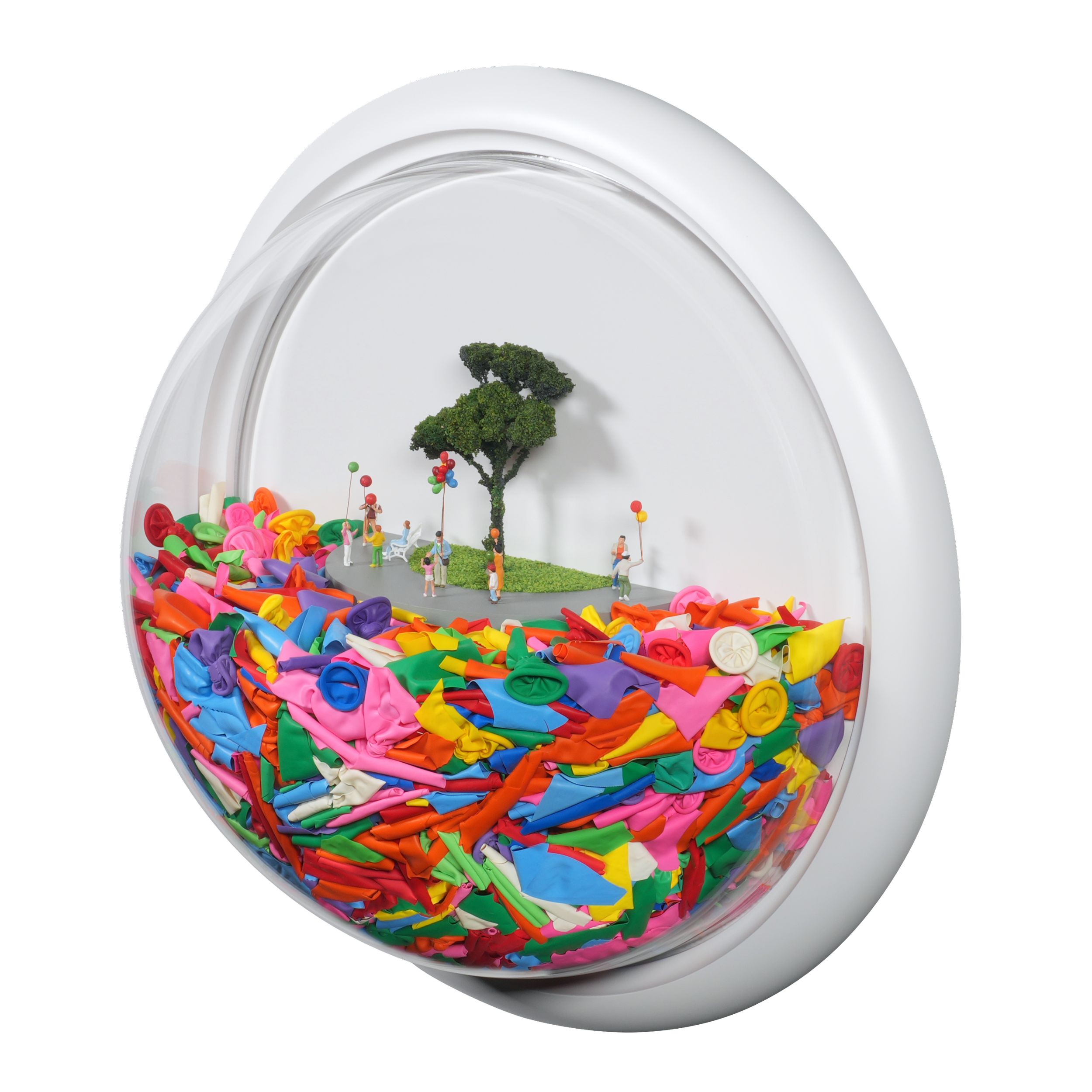
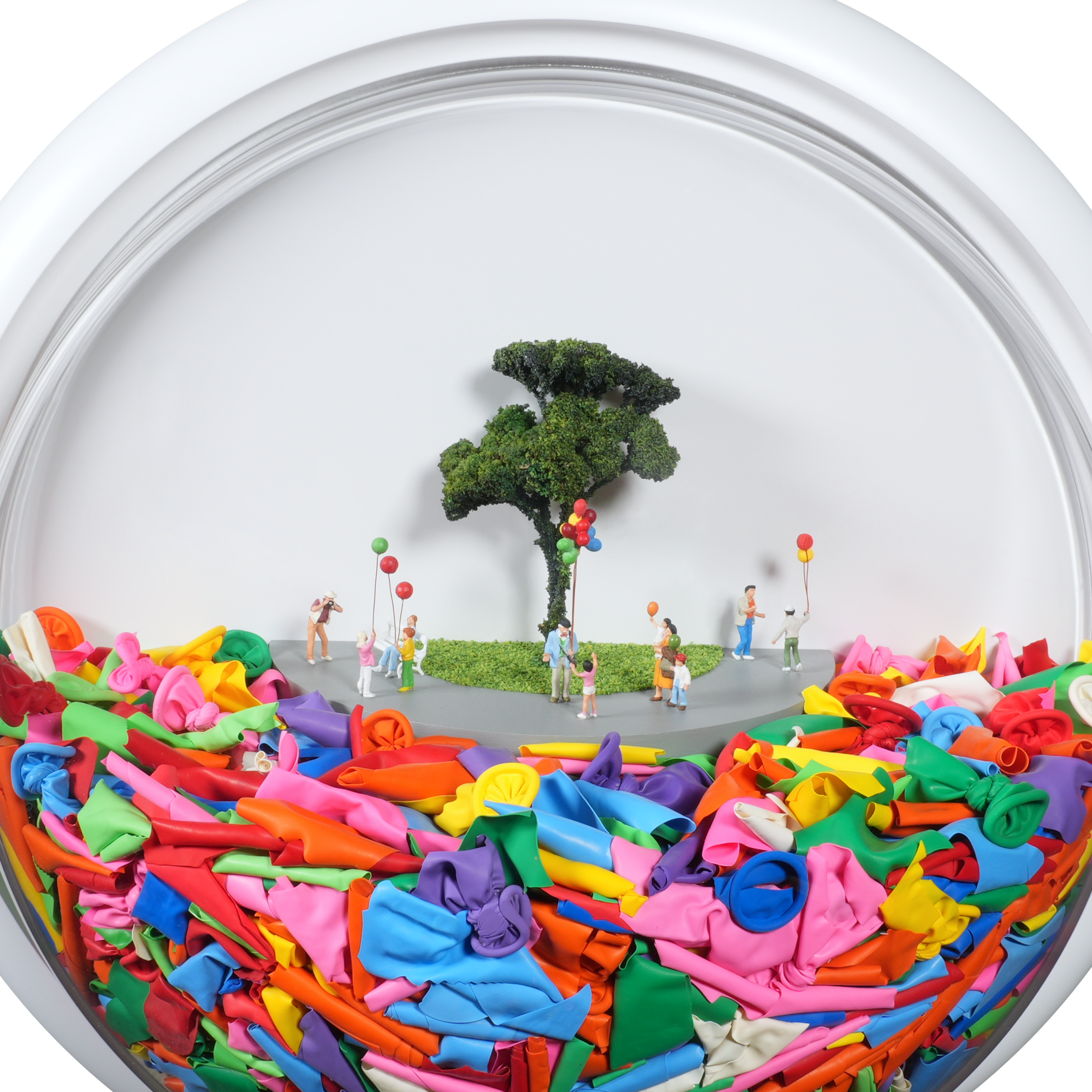
What Goes Up Must Come Down
Description
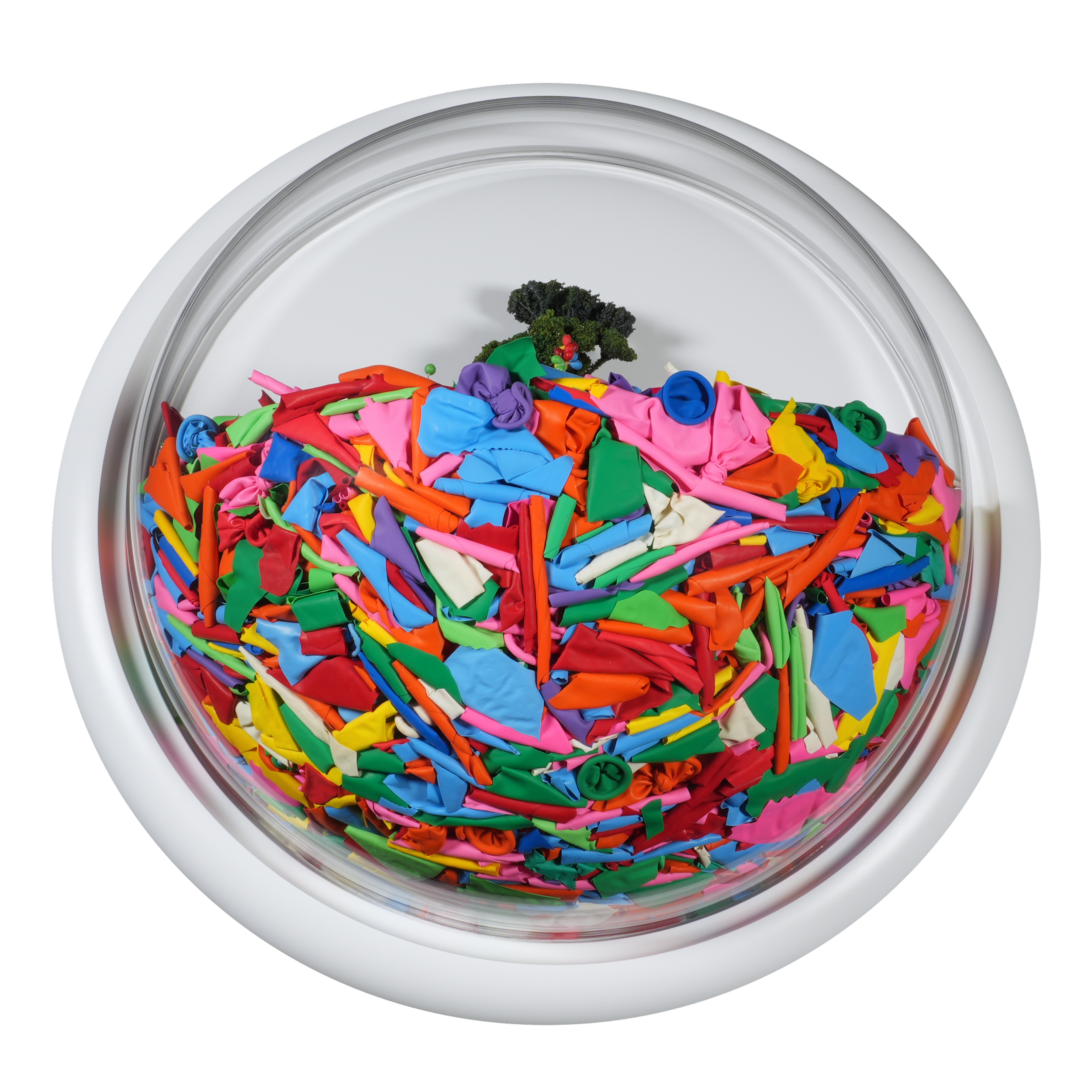
Through subtle irony and a gently playful scene, What Goes Up Must Come Down traces the fragile arc between celebration and consequence. Once symbols of joy and release, these balloons now linger as deflated
remnants - moments that have passed, yet refuse to disappear.
Reimagining a familiar phrase, the work reflects on inevitability: not only the pull of gravity, but the quiet return of everything we discard. What rises effortlessly, carried by breath and optimism, must eventually fall - transformed into waste that endures far beyond the moment it served.
The piece draws attention to the overlooked aftermath of fleeting pleasures, exposing the hidden permanence within disposable culture. Quietly evocative, it invites reflection on the cycles we sustain and the weight of what we leave behind, long after the celebration fades.
Subtle yet resonant, What Goes Up Must Come Down asks us to consider the full lifespan of what we use, discard, and ultimately leave behind.
-
Used balloons, model tree and grass, HO scale figures, acrylic dome, frame, MDF, paint
-
36.5cm X 36.5cm X 16cm
-
This artwork is a one-of-a-kind, handmade piece from the What Goes Up Must Come Down series.
-
Each work is signed by the artist and individually numbered. Certificate of Authenticity comes with every piece.
Best Before It’s Too Late
Description
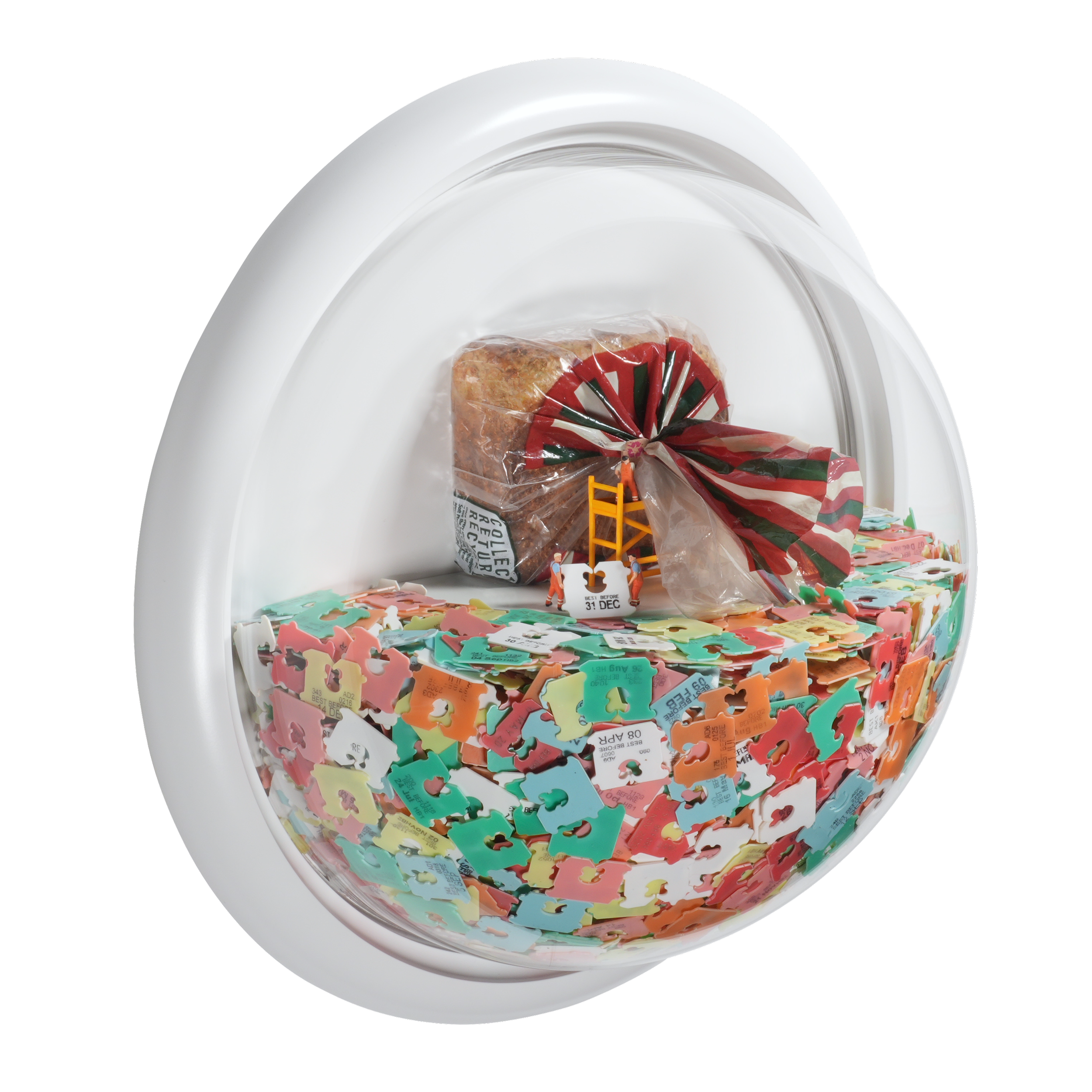
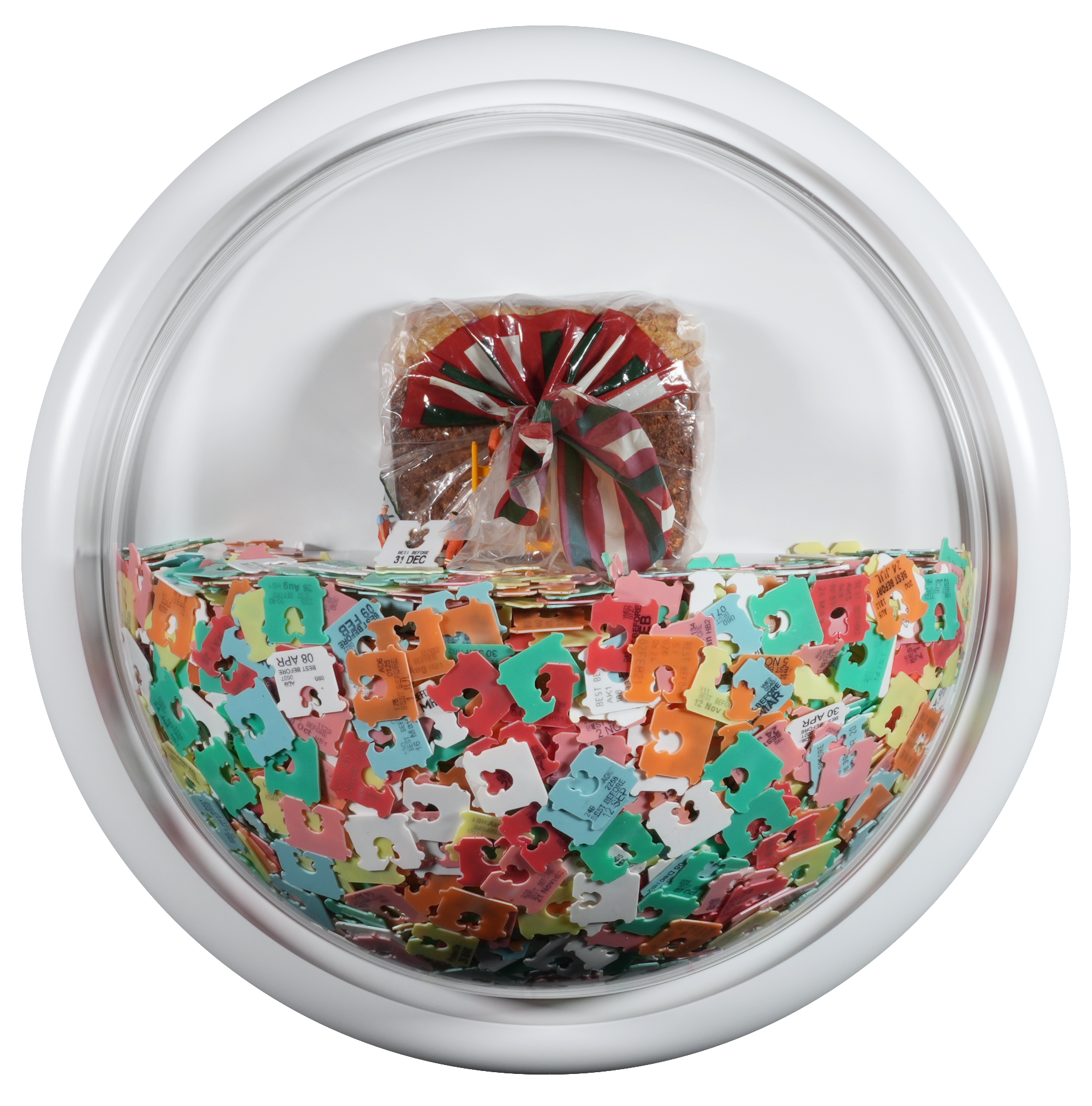
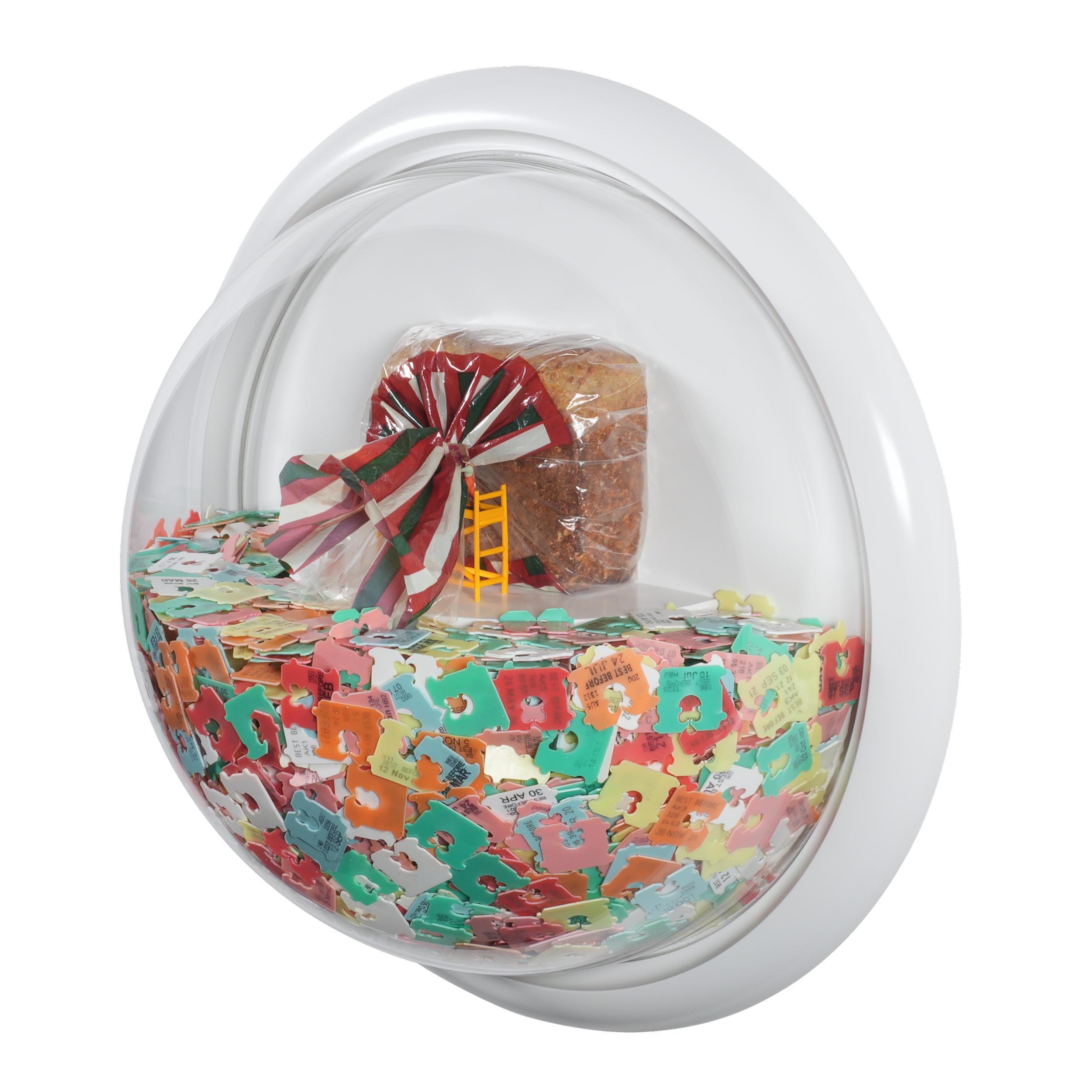
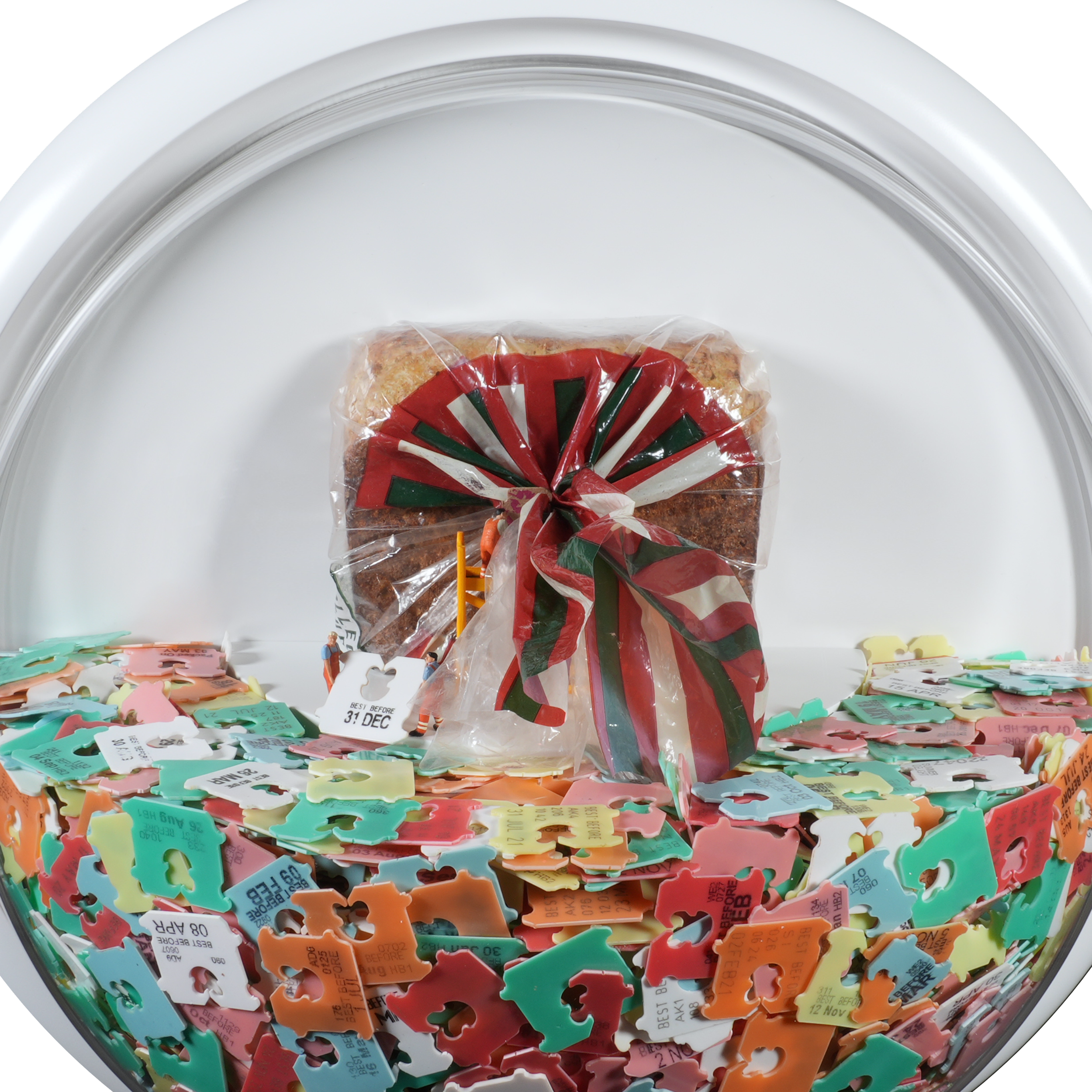
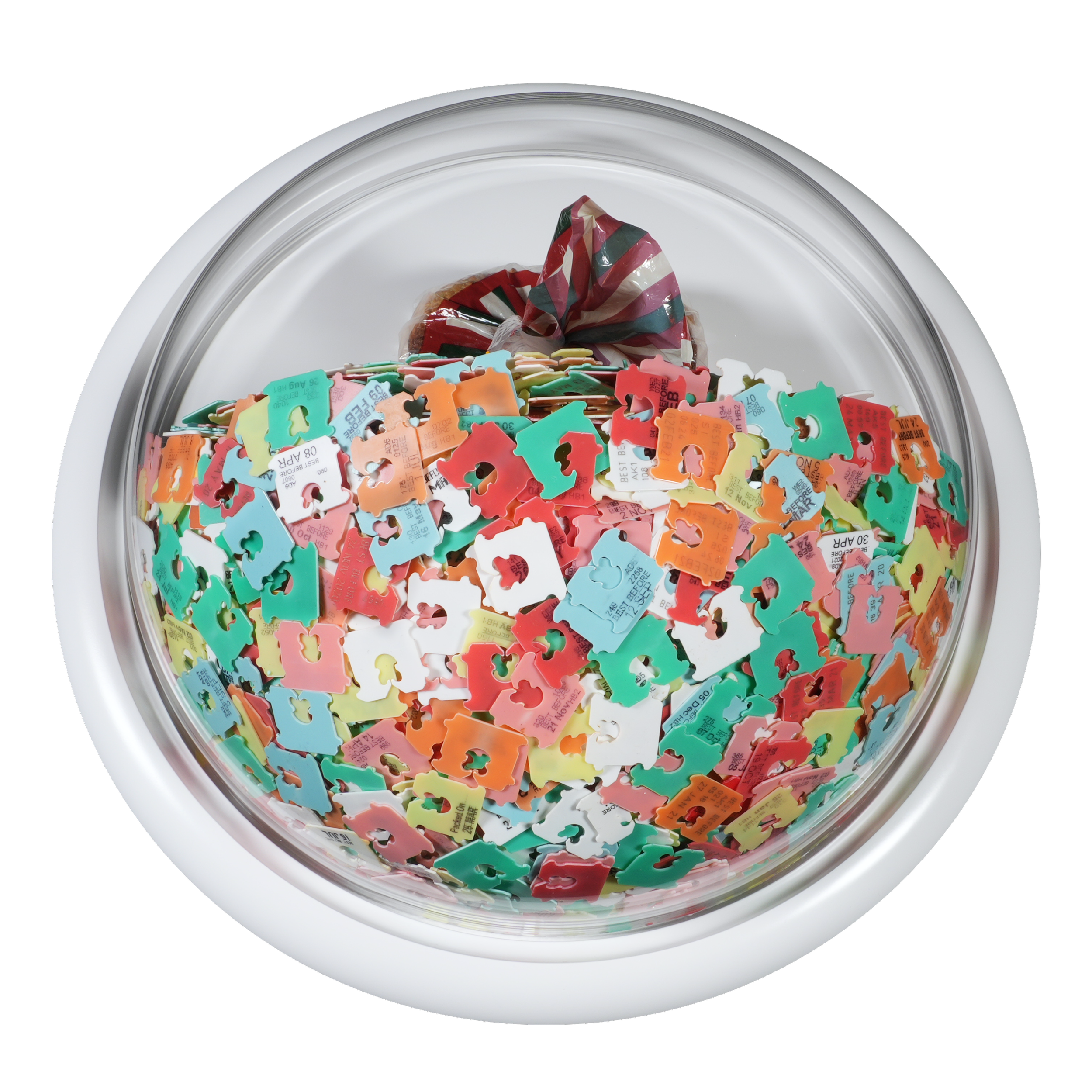
Best Before It’s Too Late re-imagines a familiar warning as a call to action, drawing attention to the overlooked consequences of everyday convenience. Single-use plastic bread tags accumulate within the scene, their abundance contrasted against the introduction of a new cardboard alternative; small, humble and hopeful.
Once designed for fleeting usefulness, the plastic bread tags linger far beyond their purpose, becoming markers of excess, habit and environmental inertia. In contrast, the cardboard bread tag stands as evidence that alternatives exist, but only matter if adopted in time.
Within this small scene, the work reflects on choice, responsibility and the urgency of change. Progress is possible, but not guaranteed.
Like its namesake warning, Best Before It’s Too Late asks us to act before convenience hardens into consequence and before the window for meaningful change quietly expires.
-
Used bread tags, used bread bag, fake bread, bamboo, HO scale figures, acrylic dome, frame, MDF, paint
-
36.5cm X 36.5cm X 16cm
-
This artwork is a one-of-a-kind, handmade piece from the Best Before It’s Too Late series.
-
Each work is signed by the artist and individually numbered. Certificate of Authenticity comes with every piece.
Out Of Sight Out Of Mind
Description
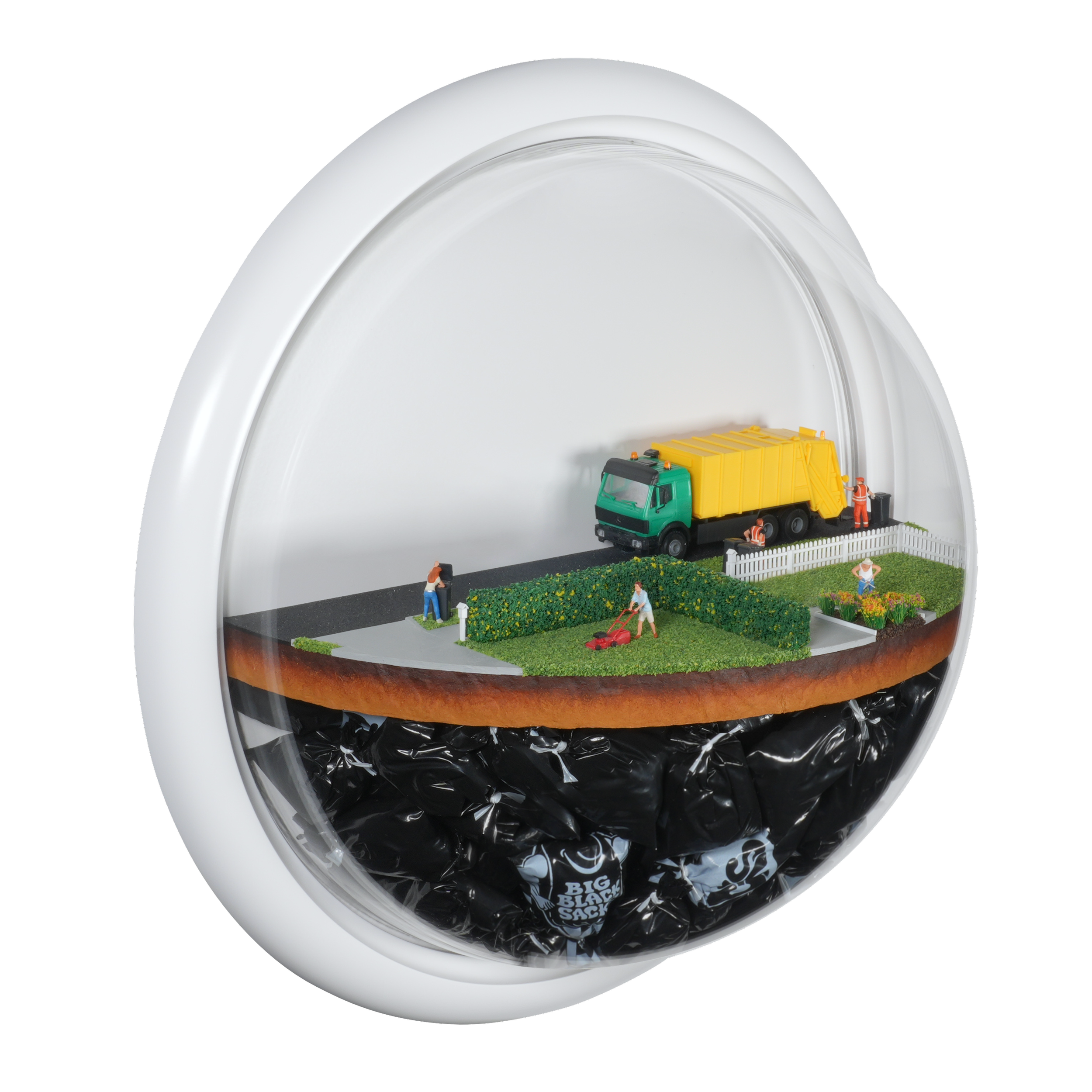
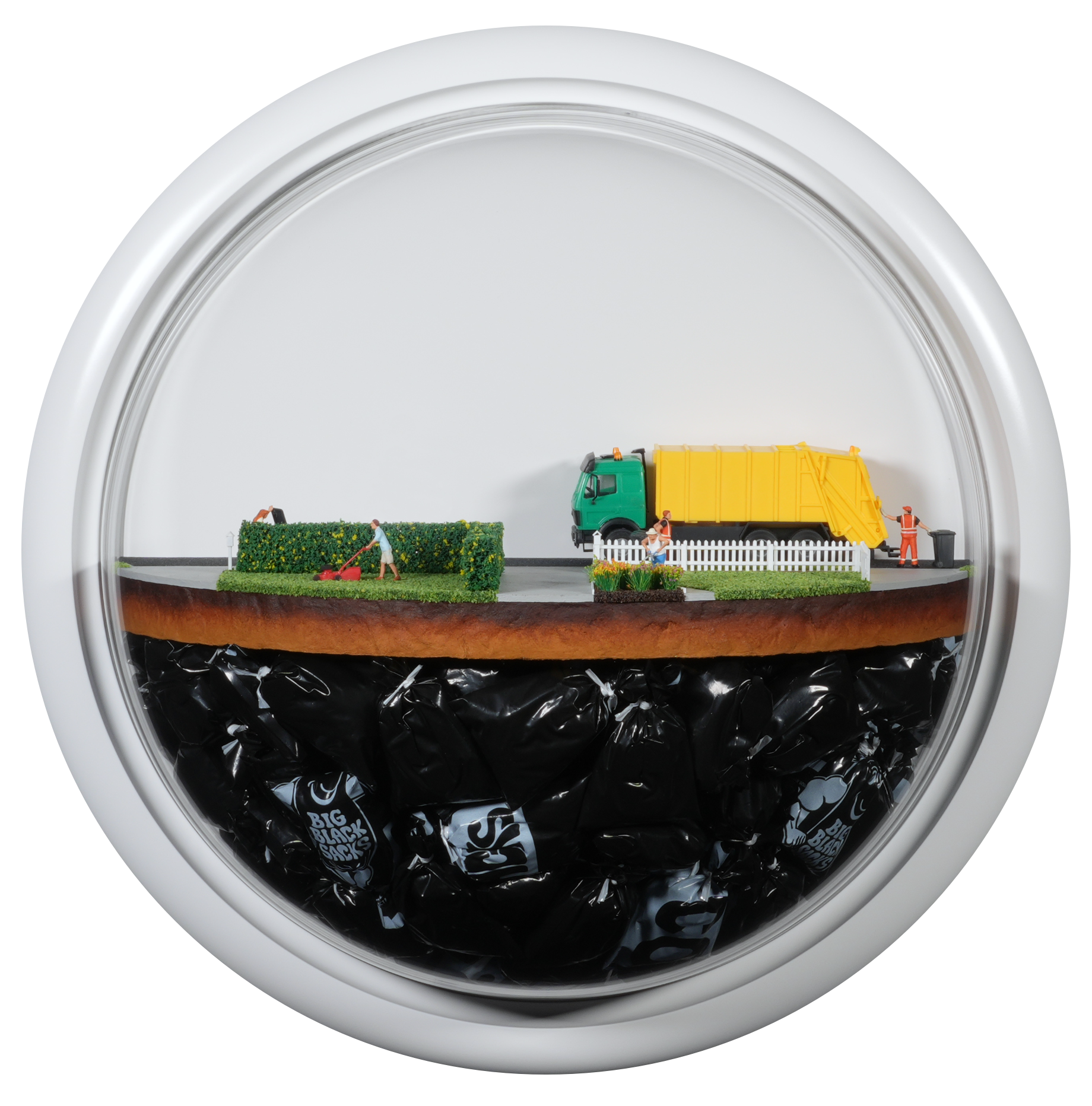
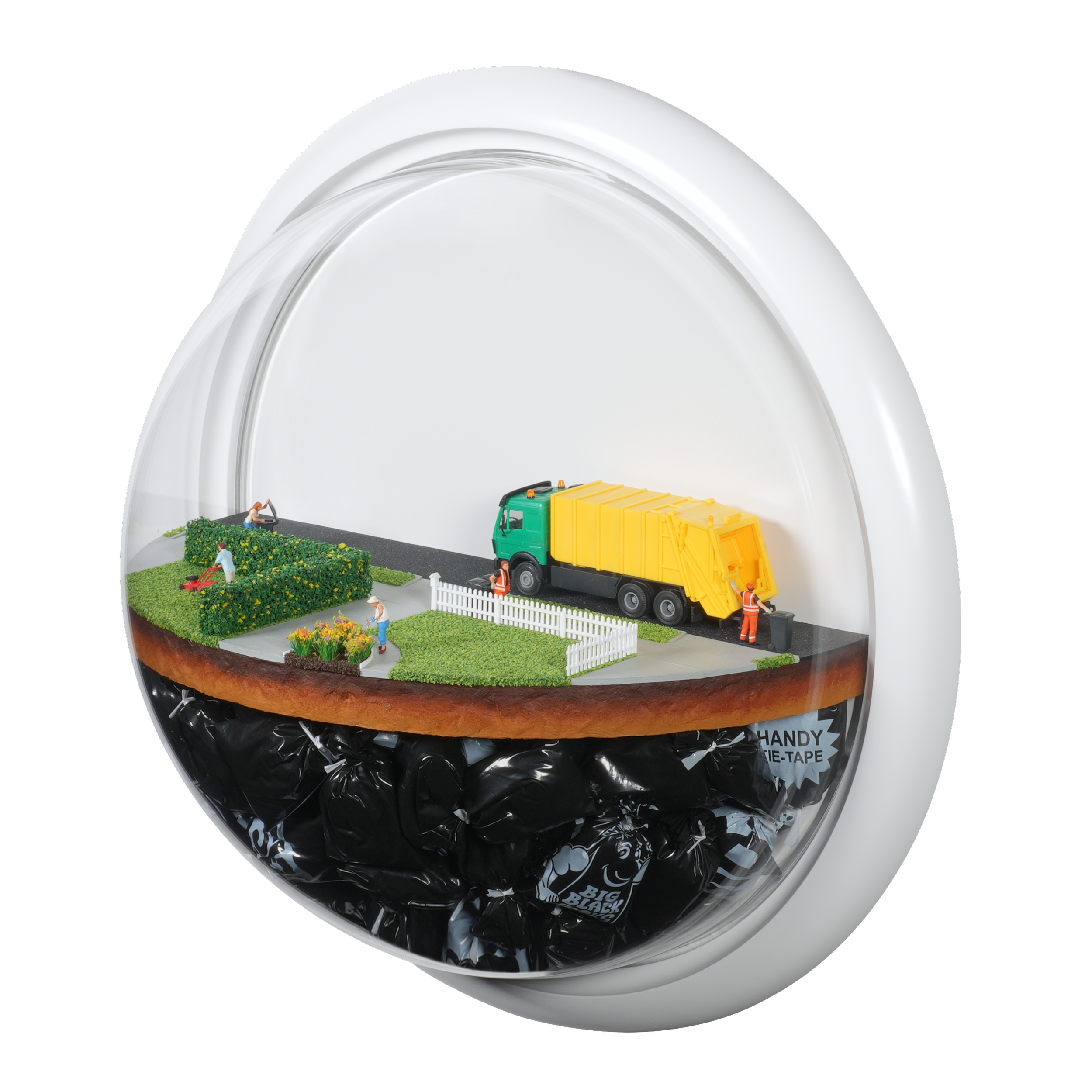
Out Of Sight Out Of Mind exposes our relationship with waste and the comforting illusion that what disappears from view somehow ceases to exist.
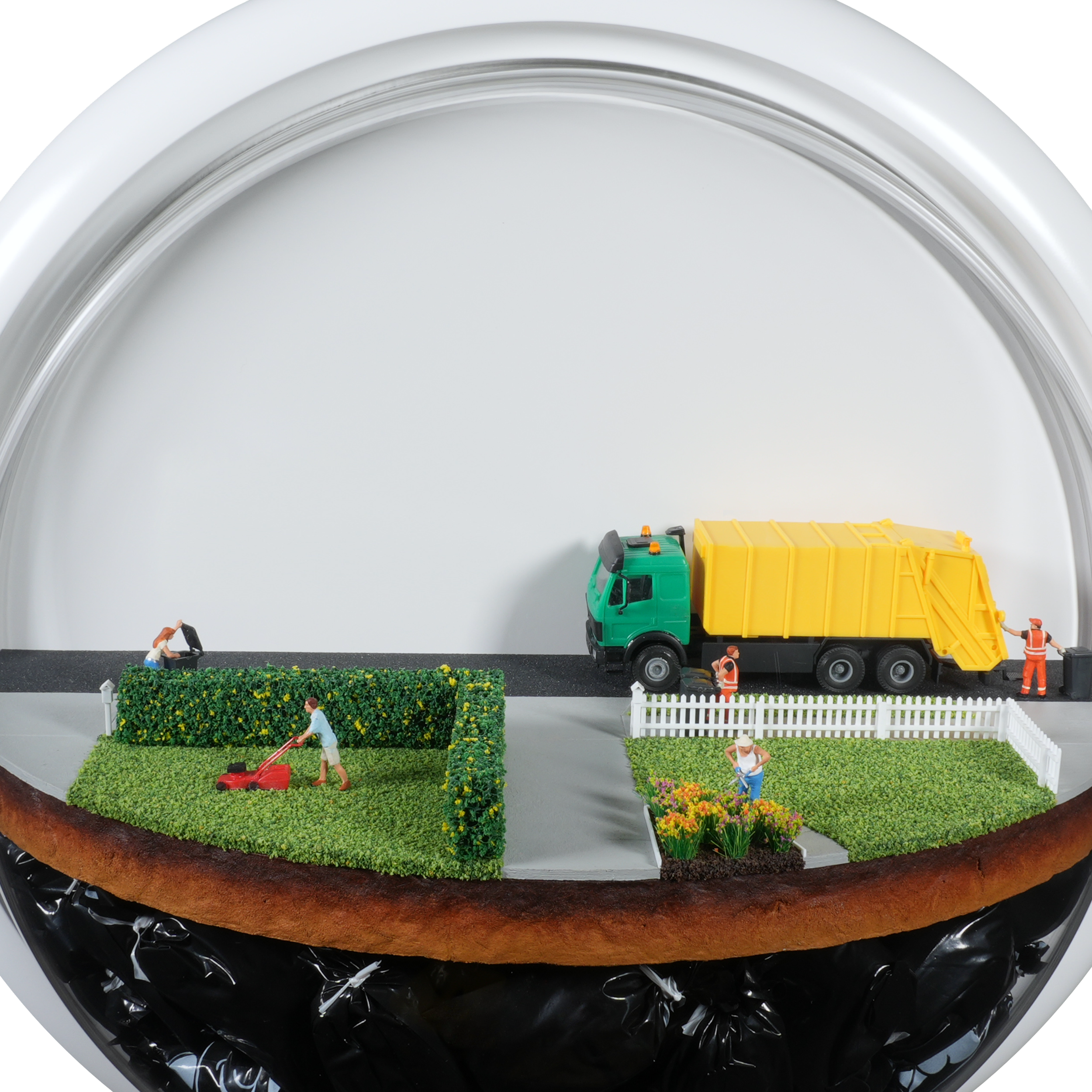
A familiar suburban street unfolds above: neighbours mow their lawns and tend their gardens, wheelie bins line the roadside, and a rubbish collection truck removes the week’s accumulated waste. Life continues as normal, orderly and seemingly unaffected.
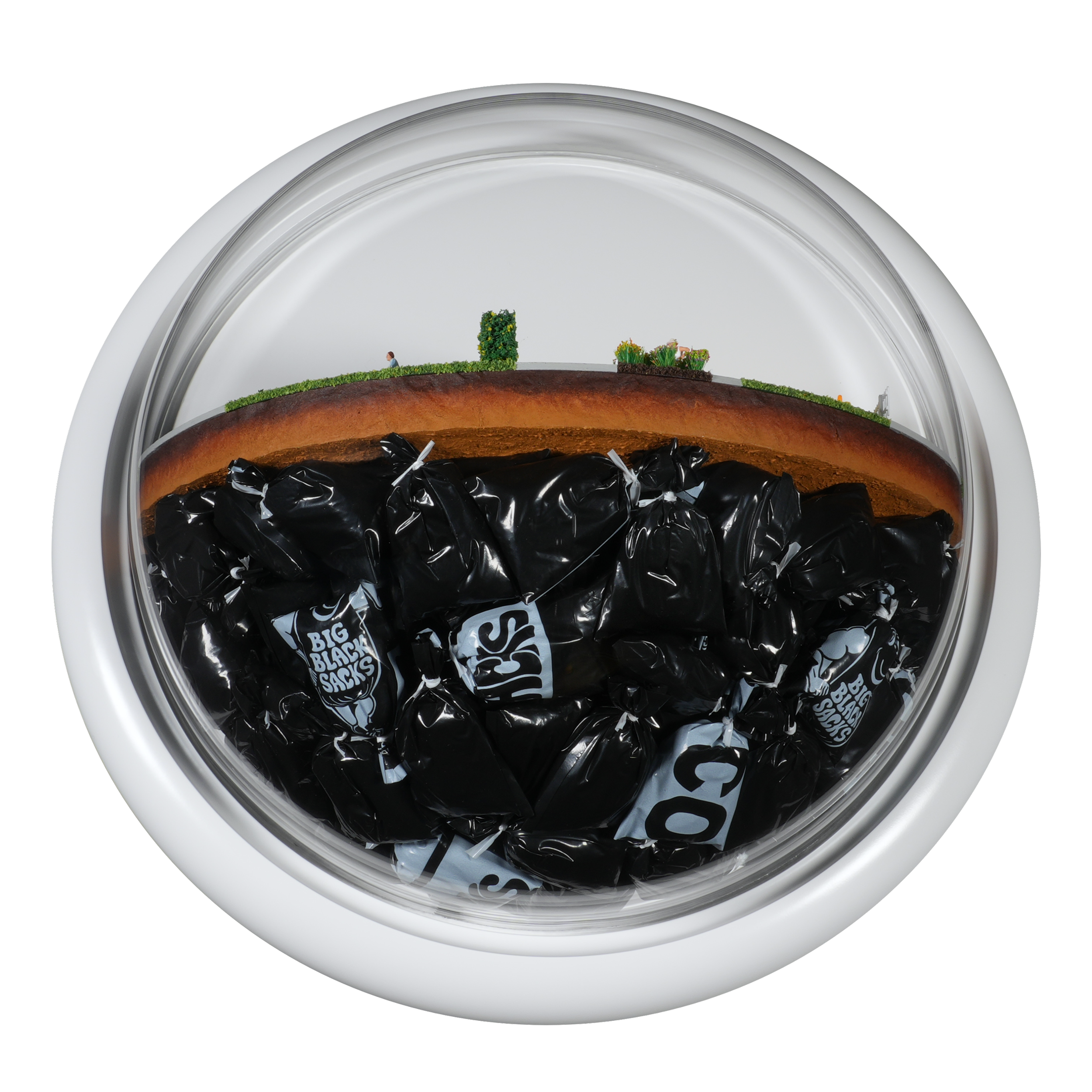
Beneath this everyday scene lies the consequence of that routine: a growing mass of rubbish bags, removed from sight but not from the environment. Meticulously hand-made from actual black rubbish sacks, the bags blur the boundary between miniature model and real-world waste.
The work highlights the simple act of putting something in a bin and watching it disappear, questioning what we really mean when something is “thrown away.”
What is out of sight is not gone; it is merely somewhere else.
-
Rubbish bags, plastic, foam, cardboard, sandpaper, model truck, model grass and plants, HO scale figures, acrylic dome, frame, MDF, paint
-
36.5cm X 36.5cm X 16cm
-
This artwork is a one-of-a-kind, handmade piece from the Out Of Sight Out Of Mind series.
-
Each work is signed by the artist and individually numbered. Certificate of Authenticity comes with every piece.
The Tip Of The Iceberg
Description
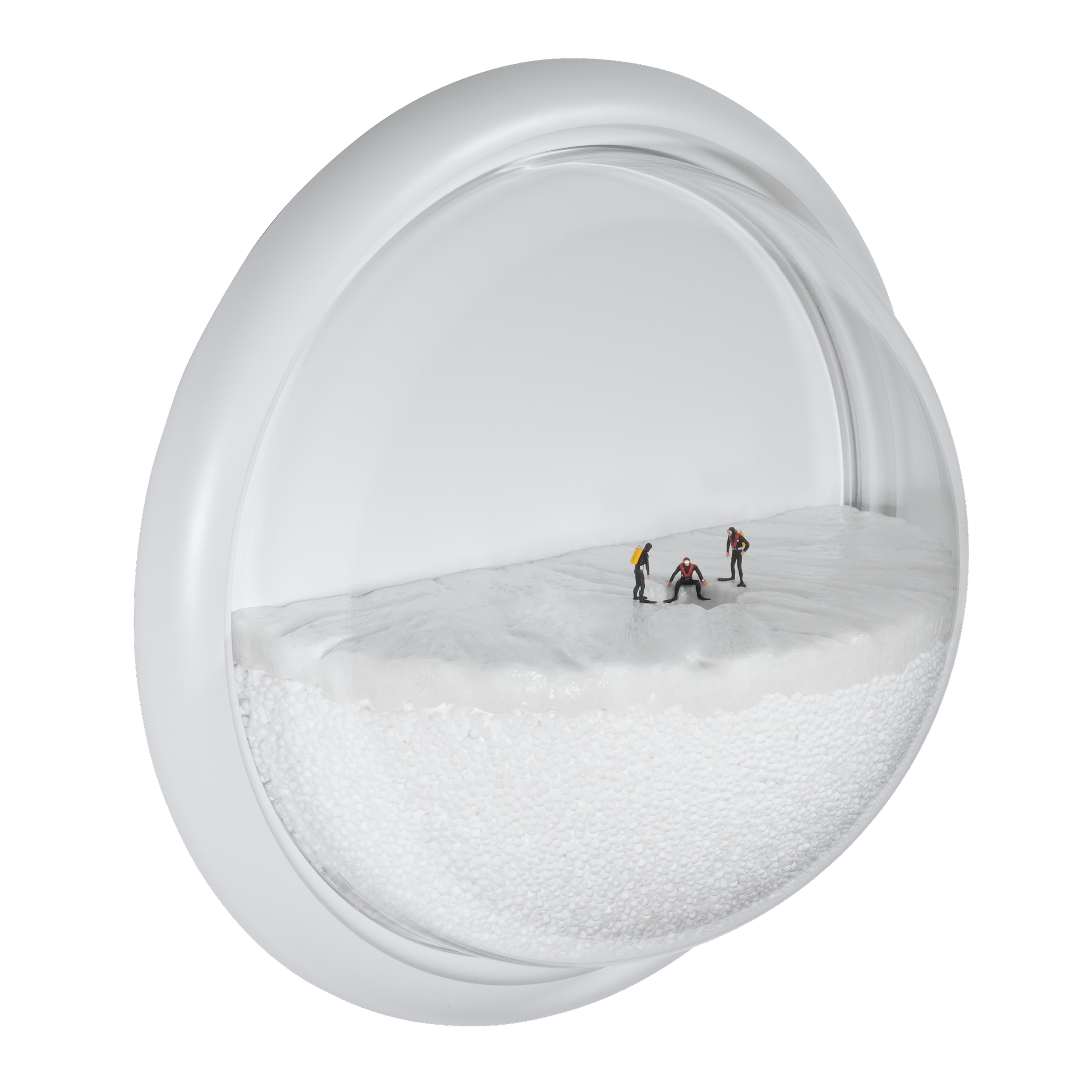
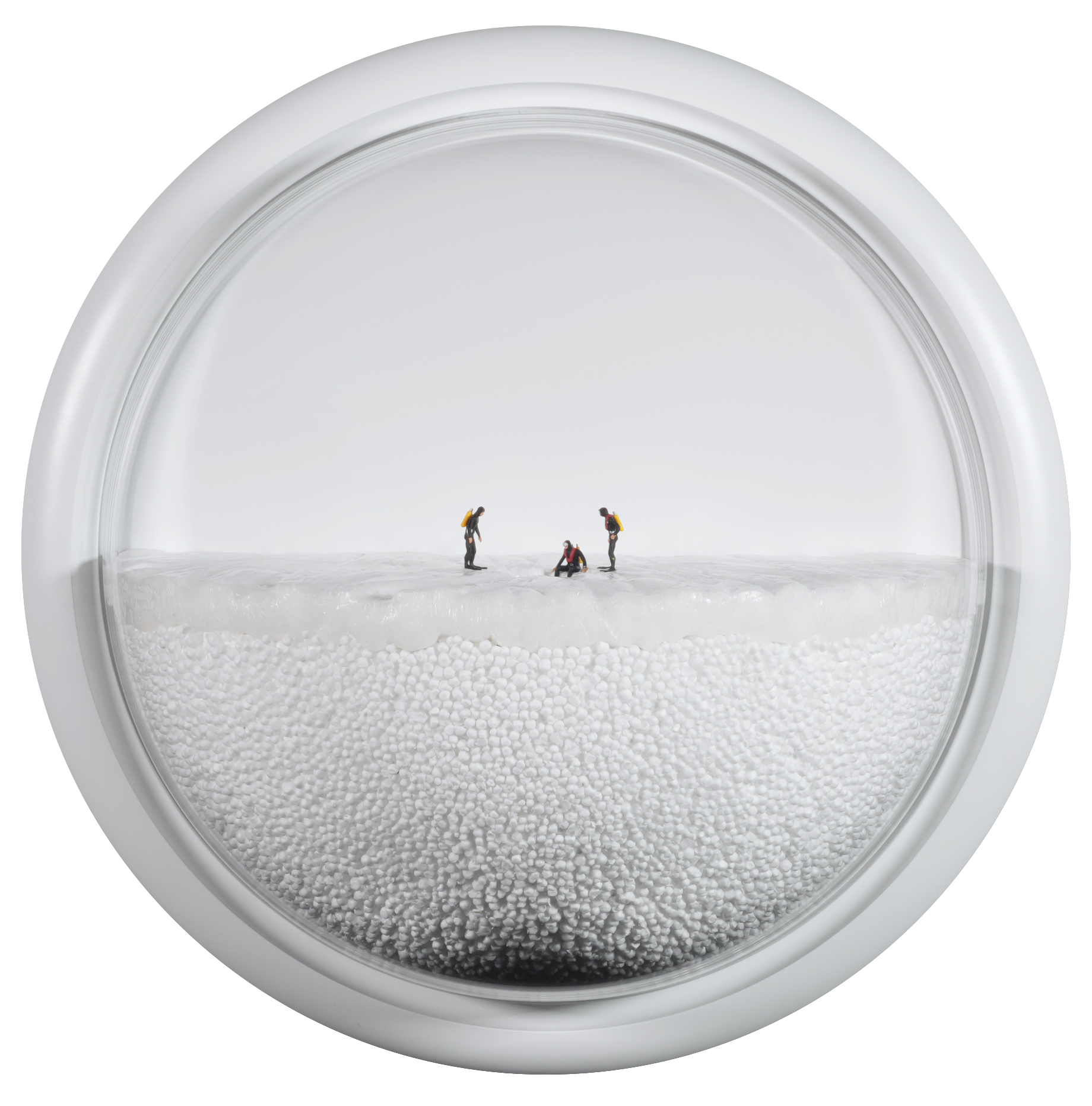
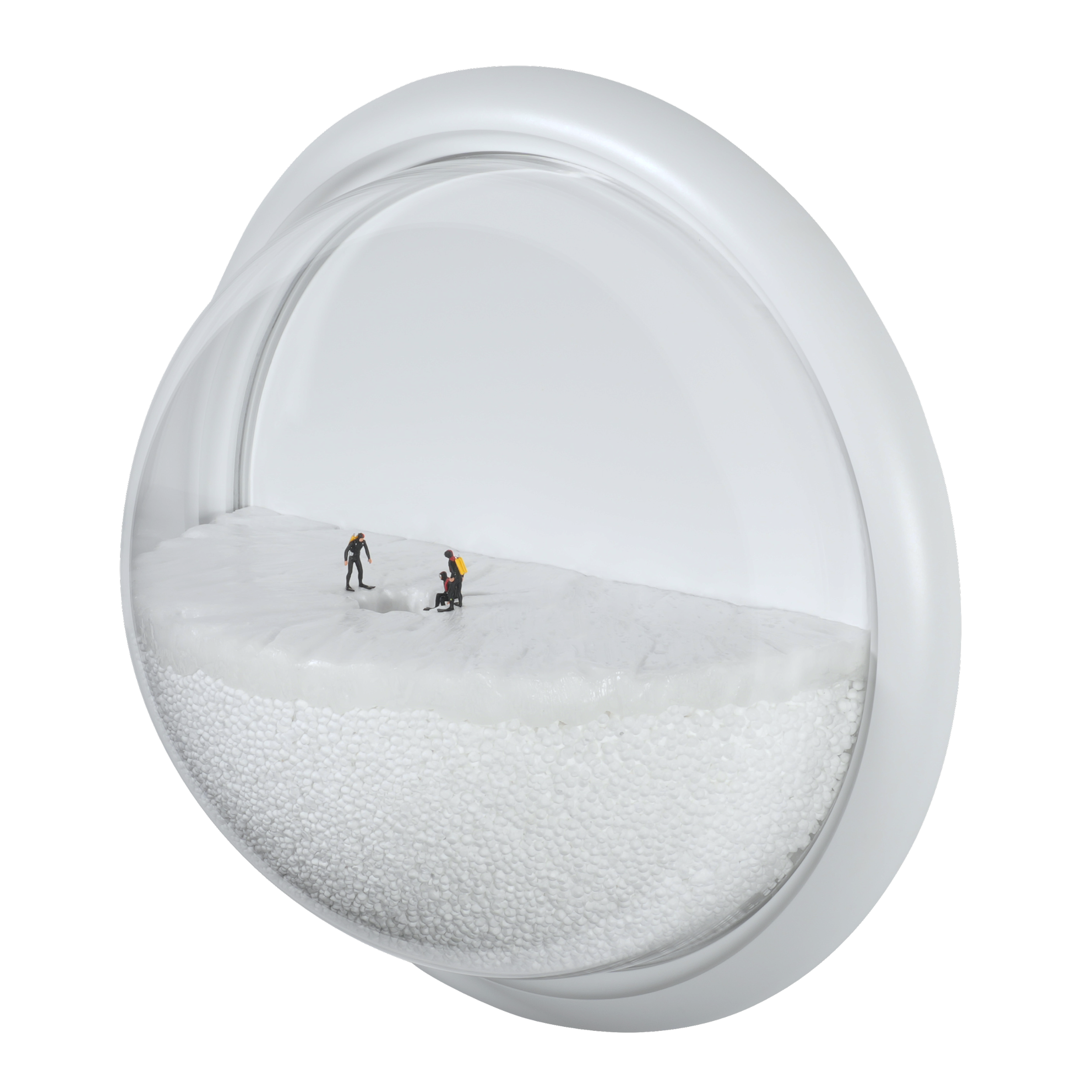
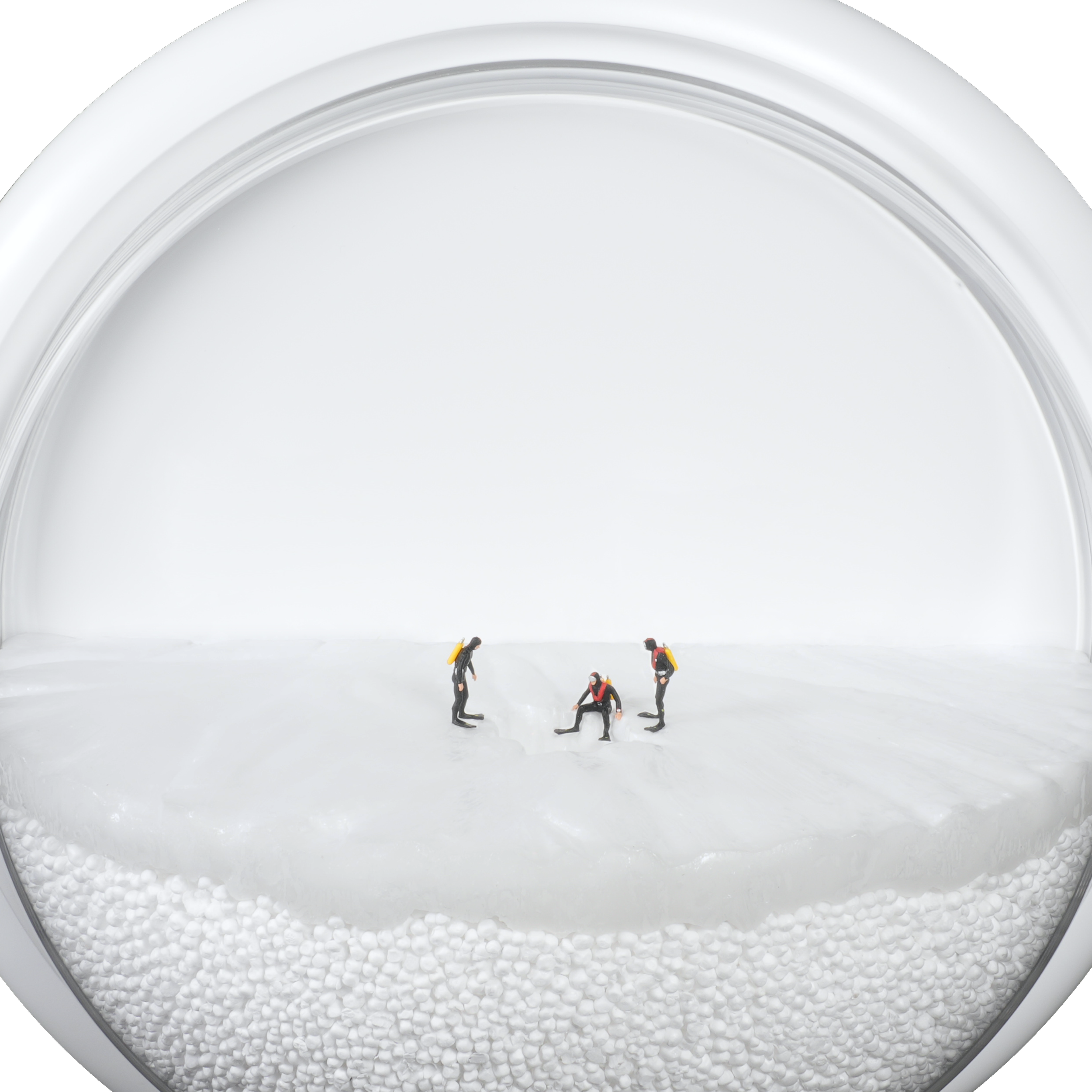
In a fragile, suspended scene, The Tip Of The Iceberg captures a moment of quiet anticipation. A group of divers gather at the edge of an opening in the ice shelf, poised to descend into the unknown. Beneath the surface lies an ocean not of water, but of polystyrene; an unsettling substitute that speaks to unseen accumulation.
Reimagining a familiar phrase, the work reflects on what lies hidden below the surface: the vast, often invisible consequences of consumption. What is visible is only a fraction; beneath it lies a growing mass of persistent waste, concealed yet ever-present.
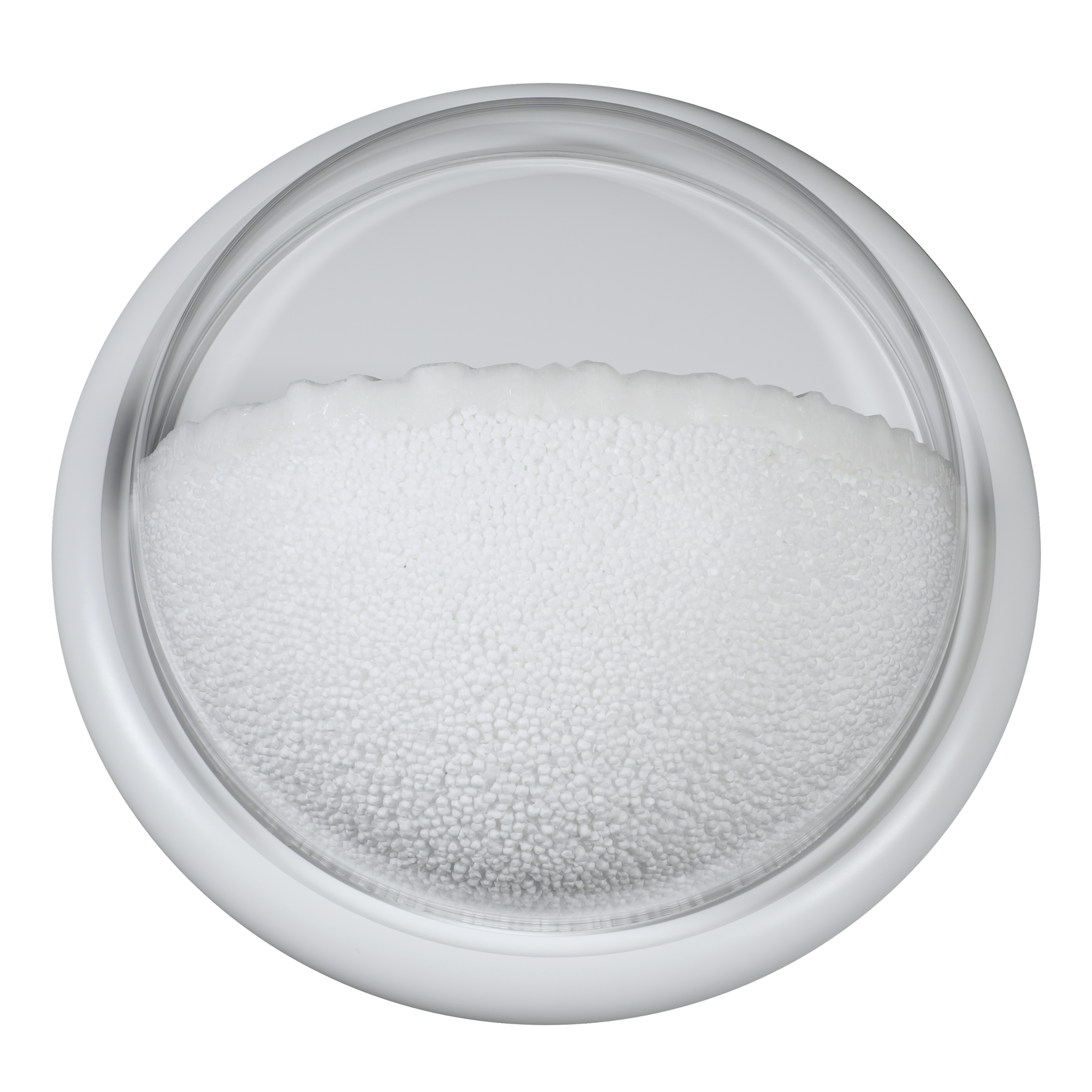
Constructed from polystyrene and wax, the piece transforms disposable material into a fragile, frozen landscape. Subtle yet confronting, it invites reflection on the unseen consequences of consumption and the growing weight of what we choose to ignore.
-
Used polystyrene, wax, HO scale figures, acrylic dome, frame, MDF, paint
-
36.5cm X 36.5cm X 16cm
-
This artwork is a one-of-a-kind, handmade piece from the The Tip Of The Iceberg series.
-
Each work is signed by the artist and individually numbered. Certificate of Authenticity comes with every piece.